October 19, 2024
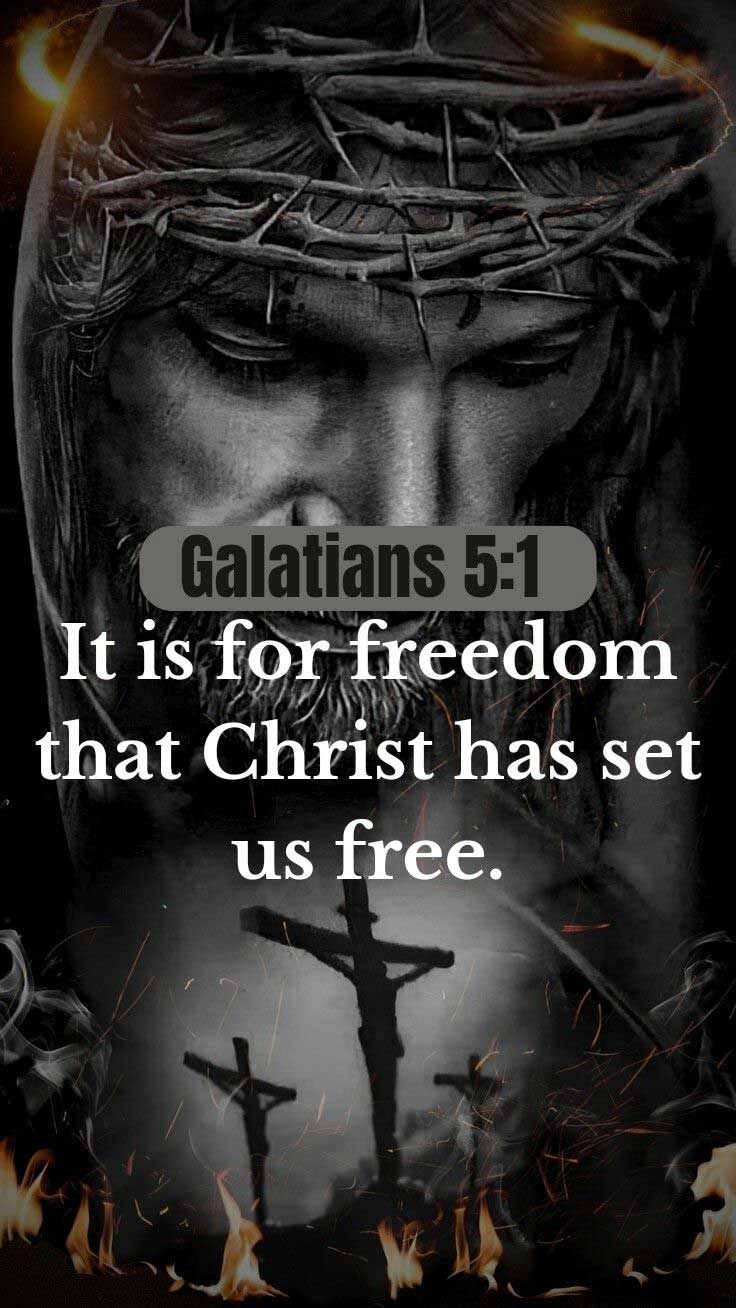
Freedom in Christ
Live as free men, yet without using your freedom as a pretext for evil; but live as servants of God.
(1 Pt 2:16)
[1] The freedom in this work is to be taken within the context of the freedom of the consecrated person who freely chooses to embrace this life and profess the evangelical counsels. Freedom is always contemplated because of service and responsibility relative to the state of life freely chosen by the person.
[2] Etymology. Freedom has different shades yet interrelated meanings: (eleuthe-ria), freedom, liberty; (eleutheros), free, independent, not bound; (eleutheroo), to free, set free; (apeleutheros), freedman. In secular Greek, freedom consists of man’s right to partake fully in public deliberations over public matters. It is the right of unrestricted speech, parrhesia which means confident openness, boldness, and frankness. Such con-notations have been carried out in the NT specifically in John.2 He can decide about his activities within the community of the freemen. Aristotle considered freedom to be the essential good of the community. However, to preserve this freedom, the law (nomos) is necessary as the principle of order.3
[3] Redemption and salvation. The freedom of Israel and its members are always related to the redeeming and saving acts of God. “Freedom for Israel meant being set free by Yahweh, e.g. from bondage in Egypt.4 Thus it was identical to redemption. It was not given by nature, but was always experienced as the gracious gift of God.”5 In contrast with the secular understanding of freedom as a right of man, it is for Israel a gift. There-fore, it cannot be claimed but could only be prayed for.
[4] The sovereign freedom of Jesus. Jesus not only recreates freedom but also acts and speaks with freedom. His ministry was not controlled by the structures and ideolo-gies of his society. Jesus’ ministry, including his interactions with the people and practic-es of social and religious institutions,6 depict him as truly free and as the embodiment of God’s freedom. He freely accepts God as ruler.7 He was a cool type of man free from daily anxieties.8 He was free from the fear of enemies.9 He was free from worldly pur-suits and his whole concern was the Father’s will,10 which is the root of his liberal minis-try.11 Jesus is freedom himself, the incarnation of God’s freedom.
[5] Our noble freedom in Christ. Freedom is more discernible to Pauline writings12 than to any other catholic epistles and the gospels except in Mt 17:26 and Jn 8:32-36.13 The New Testament differs from the Old Testament in the notion of freedom as the power to do whatever one wants. Nevertheless it acquired a personal transcendence with one’s relationship to Christ, which the Greek word eleutheria implies; it is associat-ed with its relation to God, ‘the glorious liberty of the children of God.’14 It is present ‘where the Spirit of the Lord is.’15 Profoundly it means “the freedom in Christ Jesus”,16 who set us free.17 The deliverance of Israel from their enemies found a new expression in Christ's deliverance of New Israel from the clutches of sin through his passion, death, and resurrection. The freedom obtained by Christ for men is Christian i.e., the freedom lived in Christ. Christian freedom is not theory or ideology but a Christian life.
[6] True freedom of the consecrated. As regards the freedom in the consecrated life, here comes an interplay between the freedom of the superior in the exercise of au-thority and the freedom of the individual concerning a way of living the evangelical coun-sels. Both of them should remember that true freedom neither consist of the unfettered power to direct another's life nor of living as if there’s no authority. Much more than that is life according to God’s design.18 Man is free when he follows God’s will.19 Paradoxical-ly, a free man does not belong to himself20 but to Christ who has set him free,21 who for their sake died and was raised.22 The NT similar to the OT holds that freedom is a gift bound to the giver. For all things are yours... and you are Christ’s and Christ is God’s.23 This subjection is at the same time an alliance.24 Unfortunately, still lingers even among the consecrated people the non-Christian understanding of freedom. Freedom for them is more of a right than a gift and service. They see it as the power to do what they want. So they become slaves of their own erroneous understanding of freedom. As I see that every congregation and consecrated person must be educated more on the complexity of free-dom more than the vows themselves. From the beginning of the Church, the sequela and imitatio Christi through a life of evangelical counsels presupposed freedom. “Indeed from the very beginning of the Church men and women have set about following Christ with greater freedom and imitating Him more closely through the practice of the evangelical counsels, each in his way leading a life dedicated to God.”25 Without freedom emerging from the recesses of the consecrated person the life of evangelical counsels would be a sheer burden. Understanding freedom is a lifetime process of becoming towards the per-fection of Christian freedom. As a consecrated person matures in wisdom and age, he matures in freedom but he will never say, “I am mature enough.”
[7] Maturity in freedom. Maturity in consecrated life does not necessarily coincide neither with the age of birth nor with the years of profession. It is a lifelong process of growing into liberal and radical obedience. Obedience is the school of freedom, and free-dom in obedience is the university of maturity. “In this way, religious obedience, far from lessening the dignity of the human person, by extending the freedom of the sons of God, leads it to maturity.”26 When does a consecrated reach maturity? When he stops saying “I deserve, it is my right, I am entitled to it. When the “I” becomes “Your will be done.” That is a sign of maturity of interior freedom. “In present-day circumstances, special importance must be given to the interior freedom of consecrated persons, their affective maturity, their ability to communicate with others, especially in their own community, their serenity of spirit, their compassion for those who are suffering, their love for the truth, and a correspondence between their actions and their words.”27 Despite years of formation still persists the egoistic notion of freedom, whereas the illusion of “I” remains the point of reference of freedom. It needs more evangelization, making Christ the point of reference for one’s freedom.
[8] Freedom from sin and death. Like a serious disease, sin also has a lasting im-pact on the whole person, soul and its operations. Sin enslaves the whole person. “Sin in the NT is not a single act which with time may pass and disappear. It has permanent and irrevocable bondage as its consequence for the man who once lends himself to it.”28 Freedom to commit sin is not true freedom but a deceitful form of slavery because true freedom leads to life while sin gives way to death. “Death is the harvest which man reaps from his life under sin and the law.”29 Death has a double meaning that denotes both death in time and eternity.30 The freedom from death is possible only within the death of Christ who conquered the sting of sin. He became victorious by turning sinful death into redemptive death, as he sealed death with his resurrection. The paschal mys-tery that the consecrated people celebrates every day in the eucharistic celebration is a celebration of freedom from sinful death. The death of a consecrated person is life in Christ.
[9] The absolute means of freedom. Everybody wants to be free and many people die fighting for freedom. Yet the false ideology of freedom could be also a form of slav-ery e.g. the French revolution’s libertè. The freedom of the baptized and the consecrated people is a Christian freedom not a political one. A consecrated person can only be truly free in and through Christ. “Only the Son can open up the possibility of existence in eleutheria.31 It is realized by him in the event of the cross.32 But for a man, it only becomes a present reality, when he opens his life to the call of the gospel.”33 was Christ redeemed human freedom and restored it to its original meaning – freedom to do Father’s will as children of God. Moreover, the perfection of freedom depends on man’s participation in the event of the cross.
[10] The goal of freedom. Human freedom is a determined reality. It excludes the idea of whatever I want because it is a gift with a purpose according to the design of the giver – service for God and his neighbor. “The truly free man shows his freedom in being free for the service of God,34 righteousness,35 and his fellow man.36 ‘For the love of Christ controls us’.37 The man who is free is a doulos Christou, a slave of Christ.”38 Slavery in Christ is the paradox of true freedom. It entails a lifetime dedication in service for his Kingdom.39 Among men, one is servant to another but in Christ we are all slaves – a total belonging to Him. Particular to Christian freedom is its community dimension, which is a service to the community. “The freedom granted by God was given to operate above all in the communal life of the people of God. For the Christian, Church is the community of free men.”40 No one is truly free apart from the community of Christ. Even a hermit in the desert is a part of the Church and his solitude is a form of service to her.
[11] Freedom and service. The observance of evangelical counsels in the communi-ty is a form of freedom and service to the Church. The sacerdotal ministry of the conse-crated person particularly the sacrament of reconciliation is a ministry of freedom. The penitent is freed from the slavery of sin. “Freedom is deepened to include liberation from our sinful imprisonment, and service is restored to its proper ruler, God. In the Synoptics, this is displayed throughout the ministry of Jesus, who liberated slaves of sin and those held captive by demons41 and oppressed by disease and handicaps.”42 Among the consecrated people, therefore, their observance of the evangelical counsels, in particular the vow of obedience, should not be thought as slavery to the lawful authority but as a form of service and a noble expression of freedom.43 Conversely, it is a sad reality that the lawful authority becomes also a tool of oppression, and following them is not obedience but subjugation. The present use and abuse of authority in the Church in particular in a religious community should be addressed. Higher authority should not cover-up the abuse and misuse of authority.
[12] Power: reason and will. The gift of freedom aims to enrich man on his journey towards eternal life. Though freedom distinguishes man from the rest of creation, his freedom is never an absolute value but a relative reality of man. It is a gift that enables him to respond to God’s call. “Freedom is the power, rooted in reason and will, to act or not to act, to do this or that, and so to perform deliberate actions on one's responsibility. By free will one shapes one's own life. Human freedom is a force for growth and maturity in truth and goodness; it attains its perfection when directed toward God, our beatitude.”44 Freedom is a power that empowers man to freely return to God, the only source of human freedom. Could there be freedom without God?
[13] God: the ultimate good. God provides grace to man, so that he can easily and freely orient himself to his Creator. Yet, he can still refuse the divine call of becoming God’s child. “As long as freedom has not bound itself definitively to its ultimate good which is God, there is the possibility of choosing between good and evil, and thus of growing in perfection or of failing and sinning. This freedom characterizes proper human acts. It is the basis of praise or blame, merit or reproach.”45 Human freedom is a dependent and relational variable of human existence and without a goal freedom is not freedom at all. It would be like riding a first-class flight but without a destination. Freedom is never and will never be an absolute character of man because man himself is not an absolute being.
[14] Love: freedom of God. Christ revealed to man the meaning of freedom, that is, doing the Father’s will. The “doing” is no other than “loving God in return” who loves us first and always in Christ. “Yes, in Christ it is possible to love God with all one’s heart, putting him above every other love, and thus to love every creature with the freedom of God!”46 Only through Christ [in the Holy Spirit] man can love God. He is the inner teacher, who teaches man how to love the Father the way he did. The crucified Christ is the image par excellence both of human and divine freedom.
[15] Human freedom. Out of divine goodness, the Father sent his Son, the divine teacher to teach us what freedom means. For by incarnation he became like us in all things except in sin.47 “Indeed, the Son’s attitude discloses the mystery of human freedom as the path of obedience to the Father’s will, and the mystery of obedience as the path to the gradual conquest of true freedom.”48 As the Word made flesh showed us the meaning of human freedom through his death on the cross, human freedom could only be truly achieved within the Paschal Mystery. The life of evangelical counsels, besides the perfection of charity is the perfection too of freedom.
[16] Conclusion. Neither the Constitutions nor the professions of vows confer unwarranted freedom. A consecrated person surrenders his rights and assumes ecclesial responsibilities. Morally, he has rights simply because he has responsibilities (e.g. one has the right to rest, only if he works). Actually in religious life, no one has rights but only gifts coming from our profession of evangelical counsels. Even the rights the Constitutions say are pure gifts to a consecrated person. Everybody in the community lives in the providence of God, what right does anyone have to claim such and such rights? The norms of the Rule and the Constitutions are the minimal guidelines for the consecrated person. Observe them, but never absolutize them because such thing is mediocrity. The freedom of the consecrated person is the freedom for the perfection of charity in Christ.
2 Cf., 1 Jn 4:14, Jn 7: 26, 18:20
3 Cf., J. Blunck, “Freedom”, NIDNTT, vol. 1, 715.
4 Cf., Exod. 20: 2; Deut. 7: 8.
5 Cf., NIDNTT, vol. 1, 716.
6 Cf., Mt 17:24-27.
7 Cf., Mk 1:15.
8 Cf., Lk 12:22-24.
9 Cf., Lk 6:27-30.
10 Cf., Lk 22:25-26.
11 Cf., E. W. Klink III, “Freedom”, DJG 295.
12 Cf., especially in Rom. 6-8; 1 Cor. 7-10; and Gal. 2-5.
13 “The noun eleutheria occurs 11 times (7 in Paul and twice each in Jas. and the letters of Pet.), while eleutheros 23 times (16 in Paul, 2 in John, 3 in Revelation and once each in Matthew and 1 Peter), eleutheroo 7 times (5 in Paul and 2 in Jn.), and apeleutheros only at 1 Cor. 7:22. The words are thus found chiefly in Paul and Jn. 8:32-36. They are entirely absent from the synoptic vocabulary, apart from Matt. 17:26 (NIDNTT, vol. 1, 717).
14 Rom. 8: 21.
15 2 Cor. 3:17.
16 Gal. 2: 4.
17 Gal. 5:1; cf., NIDNTT, vol. 1, 717.
18 Cf., Rom. 6:22; Gal. 5:1,13; 1 Pet. 2:16.
19 Cf., Matt. 16:24.
20 Cf., 1 Cor. 16: 19; 9: 19; 1 Pet. 2: 16.
21 Cf., Rom. 6:18, 22; Gal. 5:1.
22 Cf., 2 Cor. 5:15.
23 1 Cor. 3:21, 23.
24 NIDNTT Vol. 1, 718.
25 PC, 1.
26 PC 14
27 VC 71
28 Cf., 2 Pet. 2: 19; NIDNTT, Vol. 1, 718.
29 Cf., Rom. 6: 21, 23; 7: 10 ff, 23 ff; I Cor. 15: 56.
30 Cf., Rom. 8: 6; NIDNTT vol. 1, 719.
31 Cf., Jn. 8:36.
32 Cf., Gal. 3: 13.
33 Cf., 2 Cor. 5: 20ff.; NIDNTT vol. 1, 719.
34 Cf., 1 Thess. 1: 9.
35 Cf., Rom. 6:18 ff.
36 Cf., 1 Cor. 9:19; Jas. 1: 25.
37 1 Cor. 5: 14.
38 Cf., 1 Cor. 7:22; Rom. 1:1; Phil. 1:1; NIDNTT vol. 1, 720.
39 Usually, we exhort being a servant and we despise being a slave. The servant is a part-time worker with pay while the slave is a full-time (24 hours service to the Master) without pay. The servant owes his time to his master while the slave owes his life to his Master.
40 Cf., Gal. 4:21-31; NIDNTT vol. 1, 720.
41 Cf., Mk 5:15.
42 Cf., Mk 5:29; Lk 13:12.
43 E. W. Klink III, “Freedom”, DJG 295
44 CCC 1731
45 CCC 1732
46 VC, 88.
47 Cf., LG, 22.
48 VC, 91.
Author
Fra Alfonsus D. Panaligan, OFMConv., SThD