March 20, 2025
St. Joseph was a simple person with simple dreams. Just like most people, having a wife and children was his dream. He was already betrothed to Mary, which meant they were as good as married, but they did not yet live together under one roof. This betrothal period served as a time of preparation for the husband to build a house for his wife. At the end of this period, the husband would fetch his wife from her home and bring her to the new house he had built, where they would live together.
However, during this betrothal period, Joseph discovered that Mary was with child through the Holy Spirit. We can imagine Joseph's frustration—human as he was. After dreaming of having a family of his own, he now faced the reality that his betrothed, Mary, was expecting a child, and he was not the father. Despite this frustration, Joseph did not expose Mary to shame, as recounted by St. Matthew. He decided to divorce her quietly.
Justice must always be tempered with charity.
There was a struggle within him—to bring everything to justice and expose Mary, as his dreams had been shattered, or to seek justice tempered with charity. By choosing to divorce Mary quietly, Joseph was not condoning the apparent injustice he had experienced, but he acted with mercy to avoid scandal. If Joseph had publicly accused Mary, she could have been stoned to death. However, he was unwilling to go that far. For him, it was enough to divorce her quietly.
Undoubtedly, this was a difficult struggle. But when the angel appeared to him in a dream and told him not to be afraid to take Mary as his wife, because the child was conceived by the Holy Spirit, Joseph obeyed. By accepting Mary and adopting the child, Joseph gave the child all the rights, privileges, and prerogatives of being his own son and the rightful heir to the title "Son of David." In doing so, Joseph fulfilled what had been foretold by the prophets of old.
Yet, human as he was, his personal dream of having a child of his own would never be realized. This was his sacrifice. Joseph suffered silently—not physically, but emotionally and spiritually.
In silence and obedience, St. Joseph found strength.
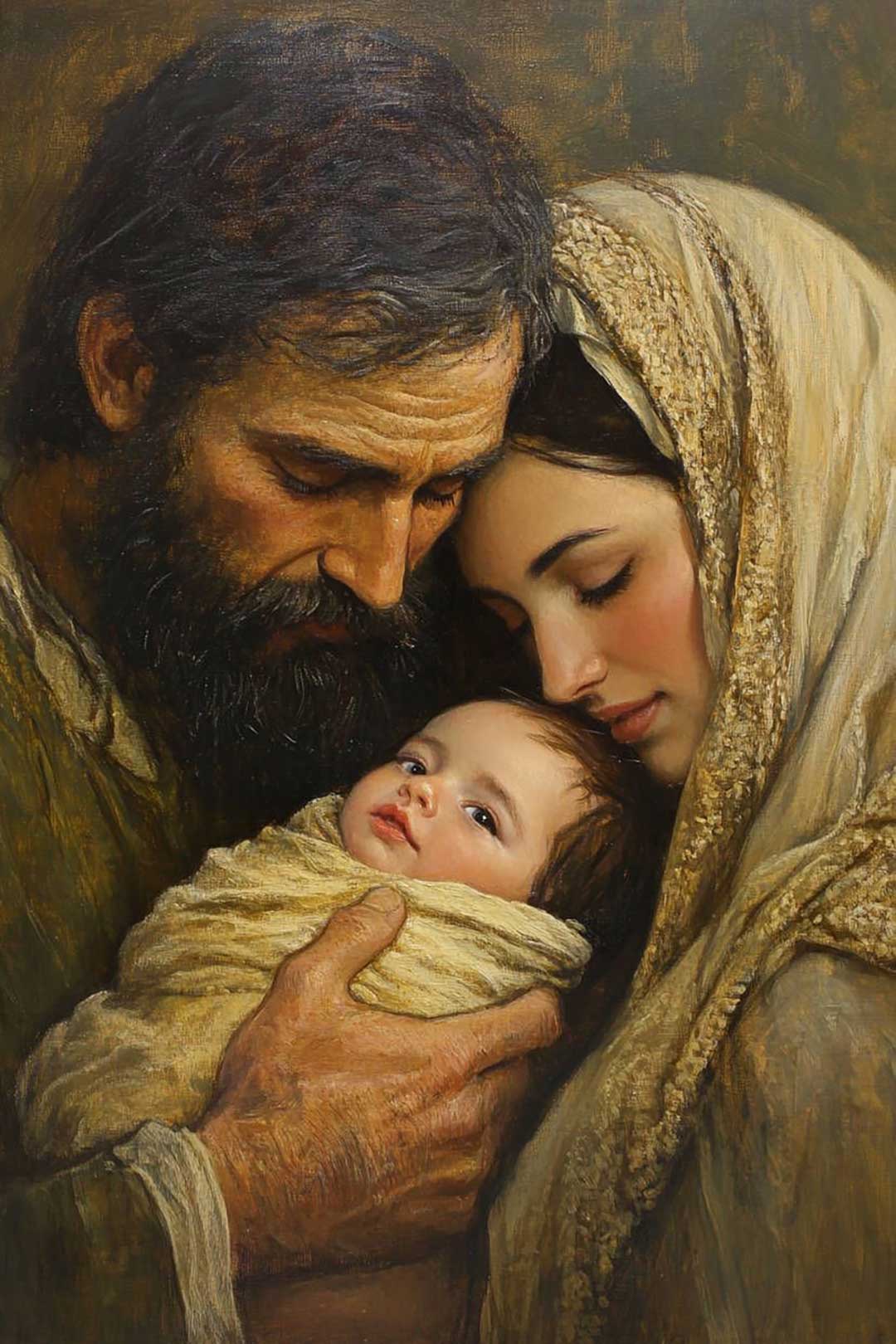
The Holy Family by Tedosaur
Nowadays, in the age of social media, it is easy to rant, bash, or make harsh comments without considering their impact on others. We can learn from St. Joseph about suffering silently and offering our struggles to God.
Many people today suffer emotionally, psychologically, and mentally. These silent struggles are not always visible. This was also the suffering of St. Joseph. From him, we can learn that even when justice is required, it must be tempered with charity. If we need to correct someone, we can do so without harsh words or shouting. We do not always know what is going on inside another person. Mental health struggles are often invisible. That is why we must be prudent, even in correcting others.
We can also invoke St. Joseph’s intercession for those who suffer silently, that they may not feel alone in their struggles and may find strength in offering their suffering to God, just as St. Joseph did.
AMEN.
Author
Fra Daniel Sugatan, OFMConv.